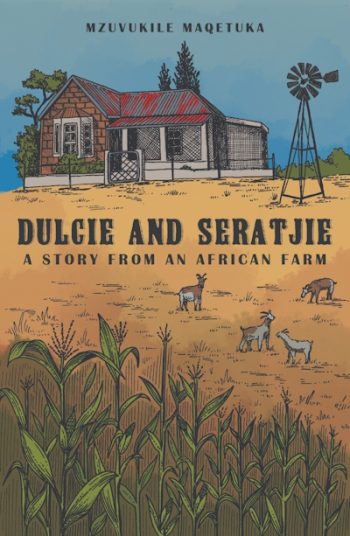
• Dulcie and Seratjie: A Story from an African Farm

    Mzuvukile Maqetuka’s Dulcie and Seratjie: A Story from an African Farm is supposed to be “stories from the dorpies of South Africa and in particular (in Maqetuka’s case) stories from the Camdeboo.” Perhaps it is. Looked at differently, this is a piece of work that shows how one specific setting could be a microcosm of a grander place characterised by (un) subtle shades of denotations and aura. It is these (un)subtle particularities that prevail to help the reader realise that we are all facing the same pleasures and hardships.
    In Dulcie and Seratjie: A Story from an African Farm, Maqetuka succeeds in fashioning a sense of ease, a piecing together, between the reader and the text. The easy-going form of storytelling that is Dulcie and Seratjie: A Story from an African Farm allows the reader to become comfortable with the text. In remarkable ways, Maqetuka pleasantly burdens the reader’s imagination through his pen to imagine the quaint and the scenic, to imagine varieties of highlands and peaks that magnify to form an exciting setting.
    Reading the stories, I found myself joined to the happenings and thus a lot more fascinated by the impending outcome – whether present or absent in the text. I found Dulcie and Seratjie: A Story from an African Farm to be a splendid piece of creative work astutely hewed to inspire entertainment that at once empowers in momentous ways. This is a delightful assemblage of appetising fragments aimed to stir the reader’s craving.
    Page on, then, and travel to meet strangers that are the same as yourself in Maqetuka’s vital Dulcie and Seratjie: A Story from an African Farm.
    Maruping Phepheng: Author of the novel, HANKAROO

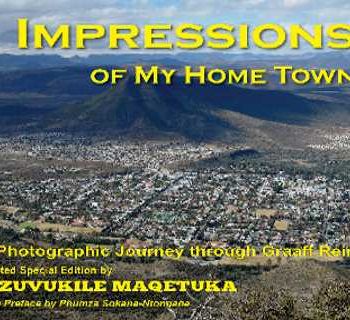
  • Impressions of My Home Town

    A Photographic Journey through Graaff Reinet

    A review by Brett Adkins [The Herald, 16:11:2012]. Re-used for this 2nd edition [2019]

    It may be known as the jewel of the Karoo, but this probing photographic take on Graaff Reinet reflects a very different wealth which the historical town undoubtedly possesses. Very much focussed on its structures – from the humblest to the ornate architecture of some of its most familiar buildings – the pictorial mostly moves right away from the grandeur of some of the latter, and finds many more many interesting, colourful gems in some of the community’s less privileged areas.

    Born in Graaff Reinet, Mzuvukile Maqetuka clearly knows his hometown inside out and his camera moves through its dusty streets – and sometimes into more lofty vantage points- to capture the quiet and attractive nature of its lifestyle, without – remarkably – using any of its inhabitants to tell his story. Rather, it’s the shanties, homes, business, churches and other diverse facades which makes up collective snapshot – often forlorn-looking on the face of it, but rich in character.

    His lens takes in the township of Umasizakhe in all its multi-layered complexity – and that throws it into a golden light. Indeed, shooting in light that enhances the most modest of homes that are often painted in cheerful shades like peach and turquoise, adds more depth and interest to this catalogue of structural studies. There are breaks from this journey when Maqetuka transports us to the dizzying heights of the Valley of Desolation and presents striking, strangely vibrant images of its unique rock formations, as well as an aerial-like shot of the sprawling town below.

    It is a meandering picture story which anyone familiar with the haunting of many a Karoo town will find fascinating.

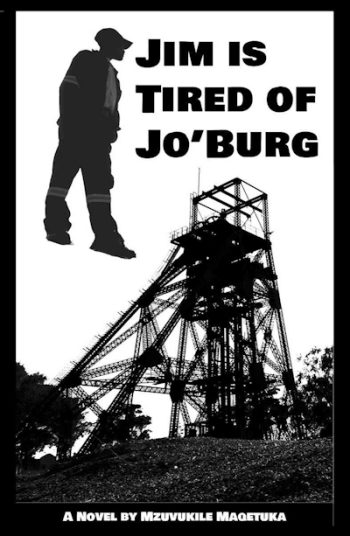
  • Jim is Tired Of Jo’burg

    Repeatedly in the recent past, we have heard of a ‘Jim Comes to Jo’Burg’ mythology in the South African context. The author has deconstructed this myth, reversing it into a ‘Jim is Tired of Jo’Burg’ scenario, telling the story through his protagonist, Jim (Kgabalatsana Monare) aka “TM”, who has come to Johannesburg from his rural village of Dinokana in the Western Transvaal in search of ‘gold’. But, as time goes by, he gets sucked into and ultimately gets frustrated by the challenges of city life, to which a rural boy is unaccustomed. He tries to make a living as a miner and makes friends with the Indian tailors in downtown Johannesburg.
    He leaves his place of employment on the mine to live in the township of Alexandra – a mass urban slum of the city of ‘gold’ where he commingles with life in a township. He meets his ‘to-be-lifetime lover’ Nancy Mabheka, who falls deeply in love with him – unfortunately for her, for when Kgabalatsana realises that he will not find the ‘gold’ that he came to the city of Johannesburg for, he decides to go back home to his village, leaving her behind. Nancy then follows him to a life that is enigmatic to her.
    Reminiscent of Peter Abrahams’ Mine Boy, Jim is Tired of Jo’Burg exposes the reader to the challenges of urban and rural life in the South Africa of the time. Through pathos, joviality, the author takes us down the memory lane of life in the townships of South Africa in the 60s and 70s, and the choice that its people had to take – to be an urbanite or ruralite.

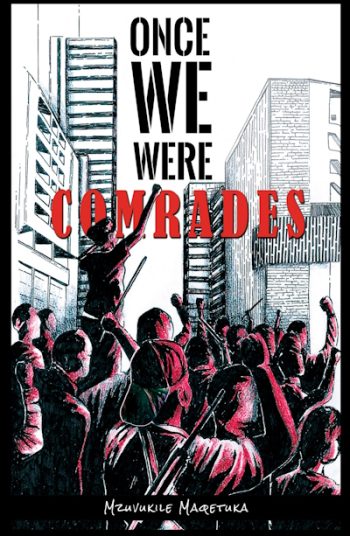
  • Once We Were Comrades

    Liberation struggles are born first out of necessity
    Any populace facing the unjustness of a colonial government, or the strictures of a dictatorial state, will eventually rise up to overthrow these heinous regimes.
    But a liberation movement’s most challenging times often follow once the fighting is over and governing begins.
    “You might think that deposing the Adema regime is a difficult task. But wait until Azamata is free and you are in government, then you will realize that fighting for freedom is far less difficult than maintaining it,” says Lexington Mawewe, the founding father of the Azamata Revolutionary People’s Party (ARPP) in Maqetuka’s new revolutionary saga, Once we were comrades. Both a valuable and highly readable addition to the struggle lexicon, this novel underlines how the high-minded and righteous ideals of liberation movements can founder on the shores of broken promises; if the people’s expectations of improved living conditions are not met.
    And this pitfall, plus a disconnect between the values and policies of the ARPP’s old guard and an ambitious new leader — who eventually takes the party to government in Azamata — form some of the book’s main themes.
    Yet, there is also much intrigue in-between. From freedom fighter Tornado Mdumbe’s heroic antics to the tragedy that befalls young Thole Msibi, the drama does not let up.

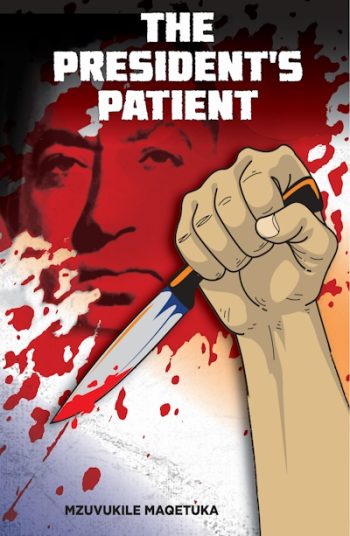
  • The President’s Patient

    On the afternoon of 6 September 1966, Demetrios Tsafendas, a Parliamentary messenger of Greek-Mocambican origin, assassinated then Prime Minister Hendrik Verwoerd in the House of Assembly in Cape Town, approaching and stabbing him in front of all the Members in the House, as well as a packed public gallery. In doing so, he had evaded General Hendrik Van der Bergh’s security apparatus, one of the most efficient and deadly in the world.
    Tsafendas, a long-time political activist and anarchist, after months of torture and interrogation, was to be found not guilty by reason on insanity at his trial, and committed to an asylum, where he died in 1999. This narrative suited the Apartheid establishment, as it portrayed him a loner and demented, and not a committed revolutionary who had been nurtured in resistance politics by his revolutionary forebears.
    In this dramatic fictionalised story, author and Ambassador Mzuvukile Maqetuka challenges that narrative and presents a whole new viewpoint on the enigma that was Tsafendas (or Fernandez Alexepoulos, as he is known in the book).
    A must read for all students of South African history!!