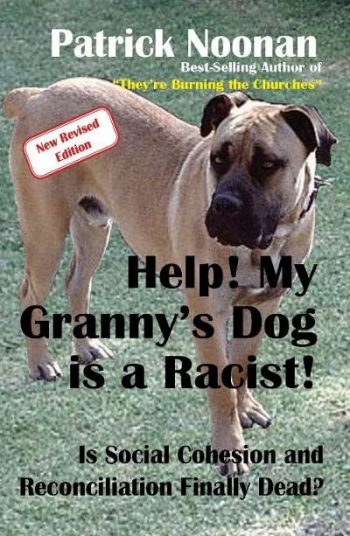
• Help! My Granny’s Dog is a Racist!

    Most of us in South Africa, during the 45 years of apartheid, didn’t notice that we had been programmed, rebooted, reset and downloaded as new creatures: apartheid man – or woman.
    We were the first country in human history to successfully try this experiment in social engineering. Happily, eventually, we saw the light and repudiated it.
    Or did we!
    Many of us are still recovering from the damage apartheid did to us.
    It must be said that from media reports, and noted in this book, a small but growing number of white South Africans are committing themselves to making South Africa a home for all.
    In spite of that, today racist outbursts are smothering the airwaves. This book is for the fools, idiots and clowns, our brothers and sisters, who manage to keep
    intolerance on the boil by their blunders, insensitivities, and inability to listen and relate to fellow South Africans. Even their dogs catch it and it goes viral on neighbouring dogs!
    Crime and racist tendencies nourish one another and feed off each other. Housebreaking is fuelled by every racial incident that hits the headlines. Read why Help, My Granny’s Dog Is a Racist proves this astonishing claim and others too that will make you cry or laugh or angry or at least embarrassed.
    Present day racists, he or she, are the typical bigoted self-centred Pharisees Jesus regularly and angrily called “hypocrites”.

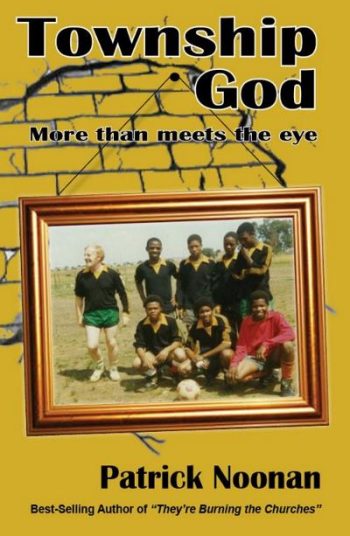
  • Township God

    This book is not Patrick Noonan’s autobiography, it is a travelogue, Michael Palin style, and a diary, John Pilger style, chronicling the events, the people, the feelings, the thoughts, the reflections, the emotions and the spirituality of a journey of more than 40 years of Christian witness in the townships of the Vaal Triangle in South Africa. It is the astute commentary, by the author of the bestselling “They’re Burning the Churches”, of a keen observer of, and participant in, some of the most momentous events in the recent history of South Africa, told from the perspective of Ground Zero.
    It provides a fascinating insight into the life and experiences of a white, celibate, immigrant missionary from Europe in a poverty-stricken, oppressed black ghetto, with only the rudder of his gut faith to guide him.
    Here Noonan candidly shares his priesthood with the reader. He also tells how the poor and marginalised of the world taught church and development workers so much. He describes vividly a frightening confrontation with the paranormal, being traumatised during the baptism of 29 infants, and waking up to the sound of bullets crashing through the window of his house. You will witness, awestruck, his angry conversations with God in a darkened church. This is a difficult book to define – you will search in vain for a storyline, or even a timeline, but it takes you to a place very few lay people get to visit – the mind of a struggling religious.