-
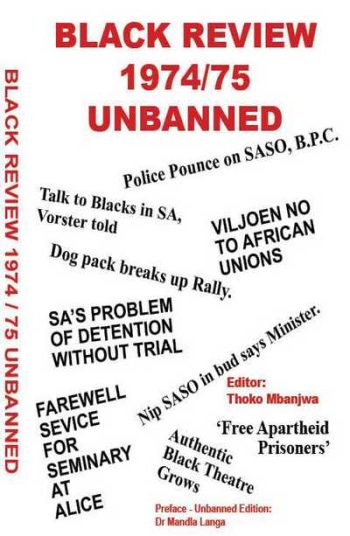
Black Review 74/75 – Unbanned
We acknowledge today that Black Review 74/75 edition [Edited by Thoko Mbanjwa] was indeed a great compendium of facts and figures written without fear or favour which now takes us down memory lane. It was a memorable, historical and educational publication that had to be revisited. The 70s Group, a group of 1970’s activists, deemed it fit to do exactly that, and ‘unbanned’ it by publishing it as a second edition.
The effort of your toil, dedication and resistance to apartheid, Thoko, and that of the team that assisted you in those days, left South Africa with a great historical document on how the Black Consciousness Movement of the 1970’s saw South Africa.
-
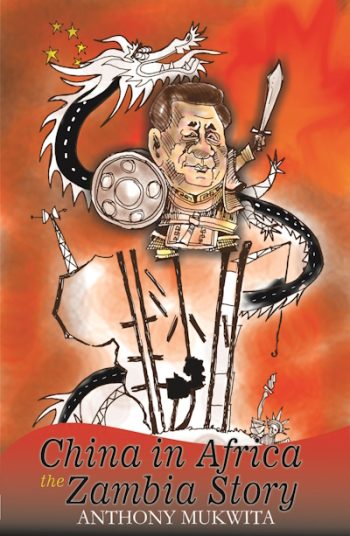
China in Africa – the Zambia Story
This book tells a riveting story of Zambia’s mixed relationship with China whose presence dominates African skies presently. It is a fast-paced, easy-to-read book, hard to put down given the mastery writing skills of Ambassador Mukwita, a former Editor in Chief, published author and senior diplomat. University libraries, embassies, bookstores and government offices need this book.
Ambassador Anthony Mukwita breaks into tiny bits an issue of global interest that would have ordinarily been complex to digest by ordinary readers.
Readers keen to know how China won the hearts of Africans and African leaders through soft power to ostensibly topple the United States and its allies from the age-old top slot will love it.
Ambassador Mukwita dives into the history of Zambia and its people, how they laugh and cry to make global sense. -
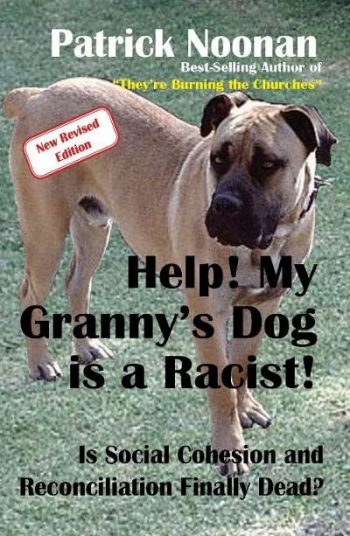
Help! My Granny’s Dog is a Racist!
Most of us in South Africa, during the 45 years of apartheid, didn’t notice that we had been programmed, rebooted, reset and downloaded as new creatures: apartheid man – or woman.
We were the first country in human history to successfully try this experiment in social engineering. Happily, eventually, we saw the light and repudiated it.
Or did we!
Many of us are still recovering from the damage apartheid did to us.
It must be said that from media reports, and noted in this book, a small but growing number of white South Africans are committing themselves to making South Africa a home for all.
In spite of that, today racist outbursts are smothering the airwaves. This book is for the fools, idiots and clowns, our brothers and sisters, who manage to keep
intolerance on the boil by their blunders, insensitivities, and inability to listen and relate to fellow South Africans. Even their dogs catch it and it goes viral on neighbouring dogs!
Crime and racist tendencies nourish one another and feed off each other. Housebreaking is fuelled by every racial incident that hits the headlines. Read why Help, My Granny’s Dog Is a Racist proves this astonishing claim and others too that will make you cry or laugh or angry or at least embarrassed.
Present day racists, he or she, are the typical bigoted self-centred Pharisees Jesus regularly and angrily called “hypocrites”. -
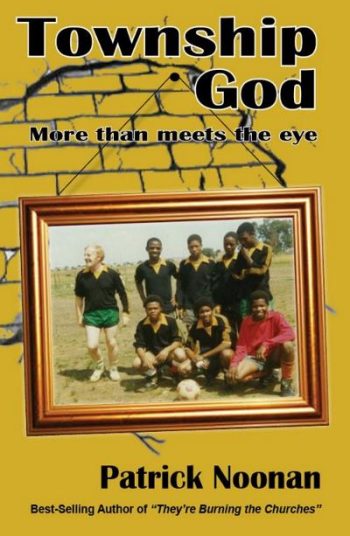
Township God
This book is not Patrick Noonan’s autobiography, it is a travelogue, Michael Palin style, and a diary, John Pilger style, chronicling the events, the people, the feelings, the thoughts, the reflections, the emotions and the spirituality of a journey of more than 40 years of Christian witness in the townships of the Vaal Triangle in South Africa. It is the astute commentary, by the author of the bestselling “They’re Burning the Churches”, of a keen observer of, and participant in, some of the most momentous events in the recent history of South Africa, told from the perspective of Ground Zero.
It provides a fascinating insight into the life and experiences of a white, celibate, immigrant missionary from Europe in a poverty-stricken, oppressed black ghetto, with only the rudder of his gut faith to guide him.
Here Noonan candidly shares his priesthood with the reader. He also tells how the poor and marginalised of the world taught church and development workers so much. He describes vividly a frightening confrontation with the paranormal, being traumatised during the baptism of 29 infants, and waking up to the sound of bullets crashing through the window of his house. You will witness, awestruck, his angry conversations with God in a darkened church. This is a difficult book to define – you will search in vain for a storyline, or even a timeline, but it takes you to a place very few lay people get to visit – the mind of a struggling religious. -
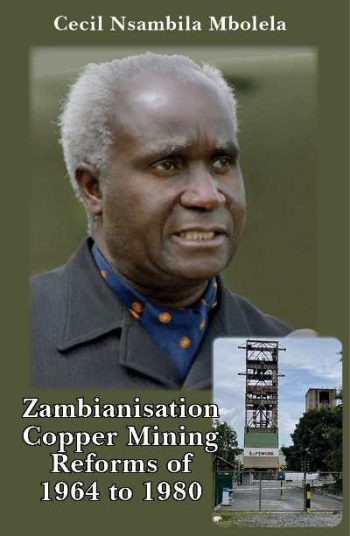
Zambianisation: Copper Mining Reforms of 1964 to 1980
Kenneth David Kaunda was the first president of Zambia. He died on 17 June 2021, aged 97, and was in power from 24 October 1964 to 2 November 1991. In this book, Kaunda’s legacy is assessed against the copper mining reforms of 1968 and 1969. In August 2021, Zambia inaugurated its seventh post-colonial democratically elected president. From the time of Zambia’s independence in 1964 until now, copper mining continues to account for 90 per cent of Zambia’s foreign exchange revenue. Before independence, Zambia’s copper mines were controlled and owned by foreign-owned firms. After independence, however, Kaunda sought to control the ownership of mines and taxation policies through Zambianisation economic reforms. This book examines the pre-colonial factors that prompted Kaunda to aggressively pursue Zambianisation copper mining reforms as the basic tool for aligning political and economic policies with economic empowerment and nation-building.