-
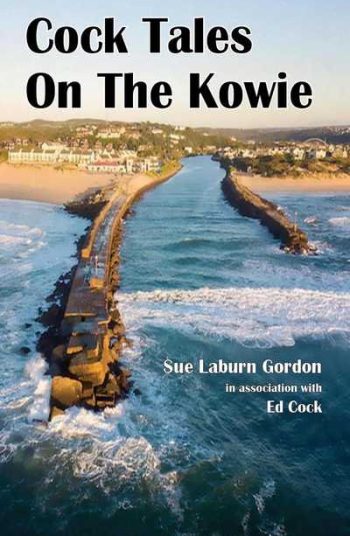
Cock Tales on the Kowie
Sue Gordon and her husband Neville purchased Richmond House, aka Cock’s Castle, on the top of Wesley Hill in Port Alfred in 1999. For Sue, this was the beginning of a fascinating journey into the history of the house and its original owner and builder, 1820 Settler leader, entrepreneur, politician, and, most famously of all, the man who shifted the Kowie River and created a harbour, the Honourable William Cock.
Sue began collecting artefacts, stories and documents about the house and William Cock, and in 2007 established the Richmond House Museum in the grounds of Richmond House.
Then, ably assisted and encouraged by fifth-generation William Cock descendant, local dairy farmer Ed Cock, she began the monumental task of researching the history of the house and the Cock family.
This eminently readable and meticulously researched book is the result.
“Cock Tales” offers the reader, whether descended from the 1820 Settlers or otherwise, a sense of place and circumstance, a fascinating glimpse into our collective past and a most welcome addition to the existing body of literature on the 1820 Settlers.
Pat Irwin, Professor Emeritus in Education, Rhodes University -
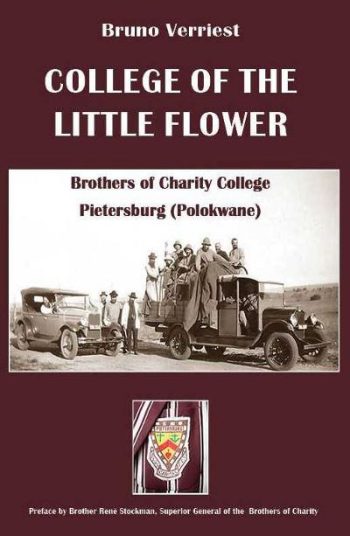
College of the Little Flower
Brothers of Charity College “Old Boy” Bruno Verriest spent a relatively short time at the College in the late 1960’s, but the school so imprinted itself into his psyche that he felt compelled, half a century later, to undertake the huge task of writing its “memoirs”.
Set in the broad historical background involving Southern Africa, the European continent – Belgium in particular – and the world at large, the book sketches the early history of the Catholic Church in South Africa with particular emphasis on mission work accomplished by the Benedictines and the Brothers of Charity in the Northern Transvaal (present day Limpopo). For the first time, a fascinating comparative study emerges of missionaries whose task it was to evangelise, to teach and to bring the good word to different cultural and ethnic populations representative of South African society. It took courage, dedication and the full commitment of those men and women to accomplish that mission.
-
Humansdorp se Groei en Bloei
“Meer as honderd-en-dertig jaar geleë het M.G. Human die grond gegee aan die N.G. Kerk vir ’n heiligdom; so het Humansdorp in aansyn gekom.”
So sê skrywer E.J. Gerryts in sy inleiding tot die tweede uitgawe van hierdie boek in 1975.
,”Humansdorp se Groei en Bloei” is die eerste keer in 1949 uitgereik ter herdenking van die 100ste bestaansjaar van die dorp.
Hierdie derde uitgawe is deur die Humansdorpse Museum Vereniging met die vriendelike toestemming van die Gerryts familie uitgereik om die 170ste bestaansjaar van Humansdorp te vier (2019).Hierdie derde uitgawe is deur die Humansdorpse Museum Vereeniging met die vriendelike toestemming van die Gerryts familie uitgereik om die 170ste bestaansjaar van Humansdorp te vier (2019).
Hierdie boek kan by die Humandorpse Museum gekoop word, en ook by Takealot https://www.takealot.com/humansdorp-se-groei-en-bloei/PLID68544932
A Write-On Reproduction Project – Giving Old Books New Life!
Click Link above for more information about reproducing out-of-print books!
-
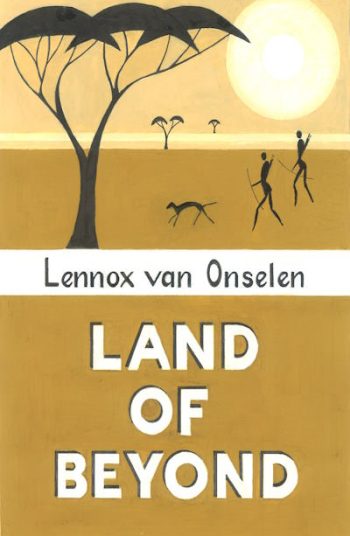
Land of Beyond
It is the mid-1960s in the Bechuanaland Protectorate, which is about to transition from British Colonial rule to self-government and independence.
Lennox van Onselen, WW II veteran, ex-policeman, author, part-time safari operator and adventurer, is about to embark on yet another expedition into the Kalahari in search of the fabled “Lost City of the Kalahari”, when his plans are up-ended, first by a recalcitrant truck, and then by having an eccentric American millionaire safari client, “CJ”, foisted onto him by a friend.
The story chronicles their adventures – and mis-adventures – on a safari which takes them the length and breadth of the territory.
Highlights include a cattle drive across the desert, a horse race meeting – Kalahari-style – and encounters with some of Bechuanaland’s legendary “characters” and its animal inhabitants.
The story of their travels in punctuated by the highly entertaining and detailed history lessons Lennox gives CJ about Bechuanaland.
A must for “Bechuana-philes”! -
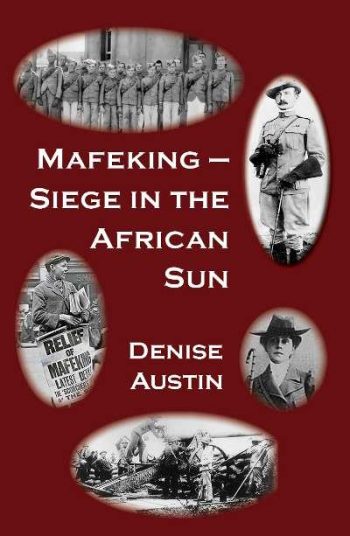
Mafeking – Siege in the African Sun
Denise Austin spent some of her early formative years listening to her grandmother Ida May’s stories about her life as a child during the Siege of Mafeking during the Anglo-Boer War of 1899.
She has long wanted to write a book, incorporating some of her Granny’s stories, and this is the result.
It is primarily a work of fiction, documenting the lives a typical ‘Settler’ family in the town during the Siege, but also an historically accurate ‘journal’ of the day to day happenings during the course of the Siege.
This combination of styles makes for a fascinating read into a period during which the eyes of the British Empire were focussed on this dusty little town on the edge of the Kalahari Desert, in one of the remotest areas of South Africa.
As a bonus, she gives us a look at two of the most colourful charachters of the Siege – Colonel Robert Baden-Powell, later founder of the world-wide scouting movement, and Lady Sarah Wilson (née Churchill, aunt to Winston Charchill), who became one of the world’s first female war correspondents. -
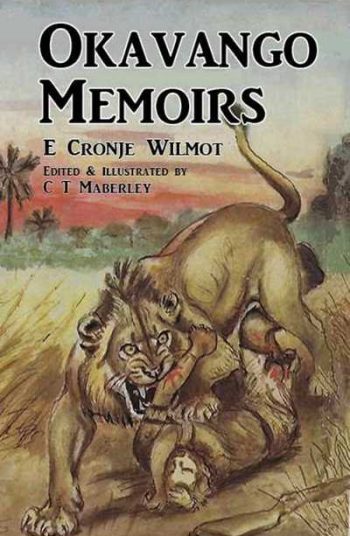
Okavango Memoirs
Mauled by a lion, charged by buffaloes, frightening encounters with crocodiles, bitten by snakes, alone in a deep, dark cave
with a wounded leopard, victim of bubonic plague…
These are just some of the experiences of stock farmer-turned-Tsetse Fly Control (T. F. C.) Officer and Ranger, E Cronje Wilmot, in the Okavango Delta in north-western Botswana, then the Bechuanaland Protectorate, in the mid-1940s.
These experiences were documented in Wilmot’s 1956 best-seller “Always Lightly Tread”, which has now been re-released as “Okavango Memoirs”.
It was not all high adventure though. Mr Wilmot was a born naturalist and a keen observer of nature – his descriptions of the Okavango Swamps – its myriad inhabitants, both animal and botanical, its moods and seasons – give us a wonderful insight into this vast and mysterious wilderness area that is still valid today.
E Cronje Wilmot was the first of the “Okavango Wilmot Dynasty”. His son Bobby was a well-known crocodile hunter in the Okavango in the 1950s and 60s, before turning to photographic safaris. Cronje’s grandson Lloyd, hunter turned conservationist and professional safari guide, has delighted hundreds of visitors to the Okavango over a period of 46 years.
Mr. Wilmot casts a spell. Despite being badly mauled by a lion, contracting bubonic plague, experiencing many frightening encounters with crocodiles, buffaloes, and deadly reptiles, his love and respect for nature is clear. The numerous graphic descriptions of wildlife in the book will entertain all outdoors lovers.
The Rhodesia Herald – December 1956 -
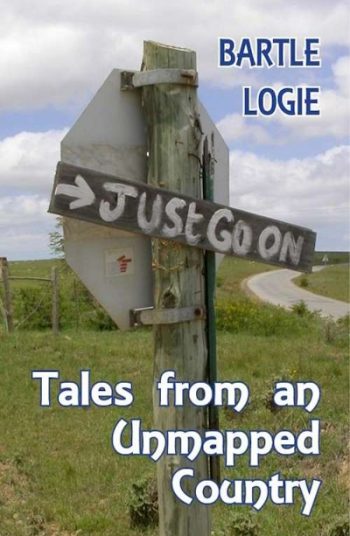
Tales from an Unmapped Country
This latest offering from Bartle Logie, his eighth, follows, to a large extent, the pattern established in his previous books: meticulous research, both on the ground and from reference material, and an easy, personal, story-telling style.
But there is a difference with “Tales”. It is a book of two journeys: one through the Border area of the Eastern Cape and the eastern fringes of the Karoo, and the other a personal one through memories of the author’s eventful and fascinating youth.
Inspired by his friend Kain Sisusa, Bartle and his wife Caryl set out to spend a year visiting familiar places to see how, if at all, they had changed. And then, “trolling through our memories, we would take a parallel journey, returning to the unmapped country of yesteryear”.“I have an idea,” said Kain. “You must go and visit my old village. Because why? Because you are always travelling and talking to people. When you come back you will be able to tell me the truth, but not to hurt my heart. You will tell me and I will be pleased to hear, but I don’t want to go there again myself, it will make my heart too sore.”
Both journeys offer up wonderful insights into places and people, and into the persona and character of the author. -
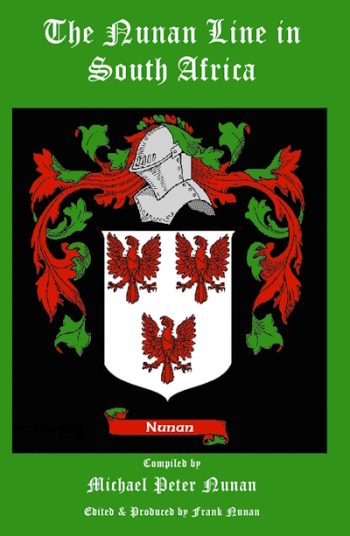
The Nunan Line in South Africa
A History of the Nunan family in South Africa, covering the stories of the original immigrant (courtesy of the British Army), Jeremiah, and his three male descendants, in a straight line of succession, down to the generation preceding that of the author.
-
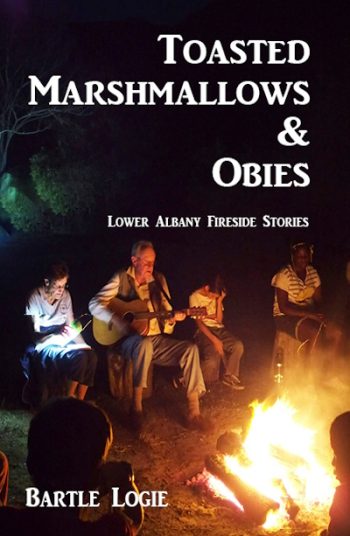
Toasted Marshmallows & Obies
This, the ninth offering from adventurer, historian and raconteur Bartle Logie, departs somewhat from the pattern established in his previous books. Here Bart offers a very entertaining mixed bag of short, sharp stories – 72 of them! We get a glimpse of his life and adventures as a young man in England and the Cape, as well as anecdotes from his childhood visits to the Lower Albany area in the Eastern Cape, where his father was born and spent his early years.
Interspersed are acute, insightful and entertaining observations of the people, the rich history and the diverse flora and fauna of this fascinating region of the Eastern Cape.
What has not changed is the meticulous research, both on the ground and from reference material, and an easy, personal story-telling style.
All in all, vintage Bartle Logie!